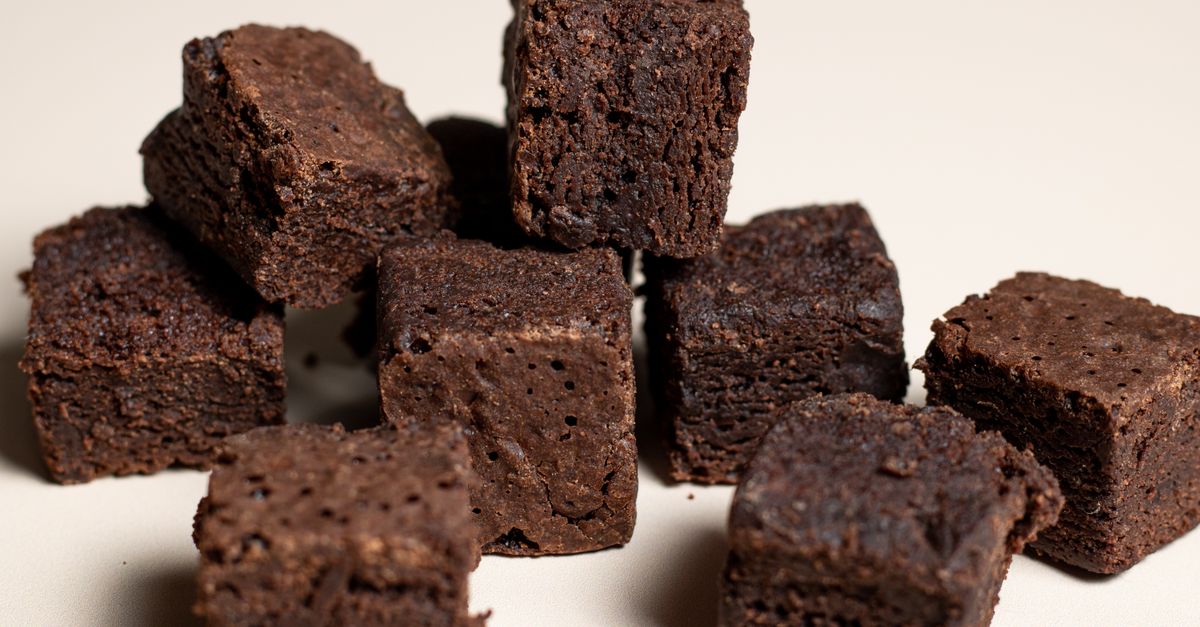
Why Your Homemade Brownies Are Cakey (And The Simple Shifts That Guarantee Fudgy Perfection Every Time)
For years, my homemade brownies were a source of quiet frustration. They tasted good, sure, but they were never fudgy. They were always more on the cakey, crumbly side – a decent dessert, but not the dense, chewy, almost-gooey squares I craved. I followed recipes to the letter, used good quality chocolate, and still, that elusive fudgy texture eluded me. It got to the point where I’d just buy bakery brownies, convinced I lacked some fundamental baking gene.
Then, after countless experiments and conversations with seasoned bakers, I realized my approach was fundamentally flawed. It wasn’t about a secret ingredient or a magic technique; it was about understanding the science of texture and making small, deliberate shifts in common brownie recipes. What I discovered changed everything, transforming my cakey disappointments into consistently rich, dense, and perfectly fudgy brownies. If you’re tired of brownie recipes promising fudginess and delivering cake, this is for you.
Key Takeaways
- Prioritize fat over leavening agents to suppress cake-like rise and promote a dense crumb.
- Control sugar ratios and types to maximize chewiness and moisture retention.
- Master the ‘just-set’ baking principle to prevent over-evaporation and maintain fudgy interiors.
- Understand how cooling methods drastically impact the final texture of your brownies.
The Overlooked Enemy: Too Much Leavening (And Too Little Fat)
Most brownie recipes are an adaptation of cake recipes, inheriting their leavening agents like baking powder or baking soda. The fundamental goal of these ingredients is to create air pockets, making cakes light and airy. But for fudgy brownies? That’s precisely what we don’t want. Our enemy here is rise.
In my early baking days, I diligently measured out a teaspoon of baking powder as many recipes instructed, thinking it was a standard component. The result? A brownie that puffed up beautifully in the oven, only to collapse slightly and reveal a crumbly, cake-like interior. What changed everything for me was drastically reducing, or even eliminating, chemical leaveners. For a truly fudgy brownie, you want gravity to win, not air.
Secondly, many recipes skimp on fat. Fat, whether from butter or oil, contributes to richness, moisture, and that desirable dense texture. I found that increasing the fat content, sometimes by as much as 20-30% compared to typical cakey recipes, made a profound difference. This isn’t about adding a spoonful of oil; it’s about rebalancing the entire recipe. For instance, if a recipe calls for 1/2 cup of butter, I might push it to 3/4 cup, adjusting other liquid ingredients slightly to maintain consistency. The higher fat content not only adds moisture but also prevents the gluten from forming too strong a structure, which would lead to chewiness over fudginess.
Actionable Insight: Check your recipe. If it calls for more than 1/4 teaspoon of baking powder or soda for a standard 8x8 or 9x13 pan, consider reducing it by half, or eliminating it altogether for maximum fudginess. Simultaneously, ensure your recipe has a generous amount of butter or oil – typically 1 cup (2 sticks) of butter for an 8x8 pan, or an equivalent in oil, for truly decadent results.
Sugar is More Than Just Sweetness: It’s a Texture Architect
I used to think sugar’s role was purely for flavor. Boy, was I wrong. Sugar is a crucial player in brownie texture, influencing everything from chewiness to moisture retention. The type and ratio of sugar in your recipe can make or break that fudgy dream.
My biggest revelation came from experimenting with brown sugar. Many recipes opt for entirely granulated sugar. While granulated sugar contributes to crisp edges, brown sugar is a game-changer for internal fudginess and chewiness. Brown sugar contains molasses, which is hygroscopic, meaning it attracts and holds onto moisture. This directly translates to a more moist, chewy, and dense brownie.
I’ve found that a combination of granulated sugar and brown sugar yields the best results. A 1:1 ratio is a great starting point, but leaning slightly heavier on brown sugar (e.g., 60% brown, 40% granulated) often enhances that desired fudgy chew. For instance, if a recipe calls for 2 cups of sugar, I’ll use 1 cup granulated and 1 cup packed light brown sugar. This balance gives you both crisp edges and a soft, chewy interior. Moreover, a higher overall sugar content (relative to flour) helps to tenderize the brownie and suppress gluten development, again steering away from cakey dryness.
Actionable Insight: Evaluate your recipe’s sugar composition. If it’s all granulated, try replacing at least half of it with packed light brown sugar. Don’t be shy with the total sugar content; it’s essential for achieving that dense, moist chew. For example, for an 8x8 pan, aim for 1.5 to 2 cups of total sugar, with at least half being brown sugar.
The Egg Ratio is Sacred: More Yolks for Unrivaled Fudginess
Eggs are binders, but they also contribute significantly to texture. For years, I just used whatever a recipe called for – usually 2-3 large eggs. The brownies were fine, but never quite hit that ‘wow’ factor of intense fudginess. The mistake I see most often, and one I made myself, is underutilizing egg yolks.
Egg whites contain a lot of water and protein. While protein helps with structure, too much can lean towards a cake-like crumb. Egg yolks, however, are packed with fat and emulsifiers. This means they add richness, moisture, and help create that smooth, dense texture characteristic of a truly fudgy brownie. What changed everything for me was incorporating an extra egg yolk or two, without adding more whites.
Consider a standard recipe that calls for two large eggs. I would typically use one whole egg plus two egg yolks. This boosts the fat content and richness without adding excessive liquid or protein from the whites. The result is a brownie that’s noticeably denser, moister, and richer – the very definition of fudgy. The extra yolk also contributes to a beautiful, glossy top crust, which is a hallmark of a well-made fudgy brownie.
Actionable Insight: Adjust your egg ratio. For every 2 large whole eggs a recipe calls for, try using 1 whole egg plus 2 additional egg yolks. This small but significant change will dramatically enhance the fudginess and richness of your brownies.
Baking to ‘Just Set’: The Precision of Doneness
This is perhaps the most critical step, and where most home bakers, including my former self, go wrong. We’re conditioned to bake until a toothpick comes out clean. For brownies, especially fudgy ones, a clean toothpick is the kiss of death.
Baking brownies to a ‘just-set’ stage means pulling them from the oven when they still look slightly underdone in the center. The edges should be set, but if you gently jiggle the pan, the very center should still have a slight wobble. A toothpick inserted into the center should come out with moist crumbs clinging to it, not wet batter, but definitely not clean. This is crucial because residual heat will continue to cook the brownies as they cool, a process known as carryover cooking.
My biggest mistake was overbaking by 5-10 minutes, chasing that clean toothpick. This extra baking time evaporates too much moisture, leading to a dry, cakey texture. Now, I set a timer for the minimum suggested baking time and start checking diligently. Sometimes it’s a difference of only 2-3 minutes from perfect fudginess to crumbly dryness. It takes practice and a willingness to trust your instincts over a ‘clean’ toothpick. The goal is a brownie that is cooked through but retains maximum moisture.
Actionable Insight: Ignore the ‘clean toothpick’ test for fudgy brownies. Bake until the edges are set and the center has a slight wobble when gently shaken. A toothpick inserted into the center should come out with moist crumbs, not liquid batter, but definitely not dry. Start checking 5-7 minutes before the recipe’s minimum suggested baking time.
The Chill Factor: Cooling is Part of the Recipe
Once your fudgy brownies come out of the oven, the work isn’t over. How you cool them is just as important as how you bake them. I used to let them cool on the counter, cut into them when they were still warm (because who can resist?), and then wonder why they didn’t hold their perfect fudgy texture.
For truly dense, perfectly fudgy brownies, a proper cool-down is non-negotiable. What changed everything for me was chilling the brownies. After they’ve cooled on a wire rack for about an hour at room temperature, I transfer them to the refrigerator for at least 2-4 hours, or even overnight. This isn’t just about preventing them from falling apart when cut; it’s about solidifying the fats and sugars, which dramatically enhances that dense, chewy texture.
Cutting warm brownies, while tempting, almost guarantees a crumbly mess and a less-than-fudgy experience. The chilling process allows the internal structure to fully set and the flavors to deepen. When you finally cut into them, they’ll be perfectly firm yet yielding, with a rich, uniform fudginess throughout. The cold also makes for incredibly clean cuts, if presentation matters to you.
Actionable Insight: Allow your brownies to cool completely on a wire rack for at least one hour at room temperature, then transfer them to the refrigerator for a minimum of 2-4 hours, or ideally, overnight. Only cut them once they are thoroughly chilled for the best texture and cleanest slices.
Frequently Asked Questions
## Can I use cocoa powder instead of melted chocolate for fudgy brownies?
Yes, you absolutely can, but the method changes slightly. For maximum fudginess with cocoa powder, ensure you’re using Dutch-processed cocoa, which is less acidic and yields a darker, more mellow chocolate flavor without interacting too much with baking soda (if you use any). More importantly, many fudgy cocoa-based brownie recipes rely on adding hot liquid (like coffee or boiling water) to the cocoa powder to ‘bloom’ it, intensifying its flavor and creating a moist batter base. This method often results in incredibly fudgy brownies, but the overall recipe balance will be different than one using melted chocolate.
## My brownies are still cakey, what’s the most common culprit?
The most common culprit is overbaking. Even if you’ve adjusted the ingredients for fudginess, baking for too long will dry out the brownies and make them cakey. Always pull them from the oven when the center still looks slightly underdone and jiggles, and a toothpick comes out with moist crumbs, not clean. Other common culprits include too much flour, too much chemical leavener (baking powder/soda), or not enough fat (butter/oil) or sugar in the recipe.
## Does the type of flour matter for fudgy brownies?
Yes, the type and amount of flour play a significant role. For fudgy brownies, you want to minimize gluten development, which contributes to a chewier, more cake-like texture. Using all-purpose flour is standard, but you should use just enough to bind the ingredients, typically on the lower end compared to cake recipes. Some bakers even experiment with a small percentage of cake flour (which has lower protein) or reducing the total flour slightly. The key is to mix the dry ingredients into the wet just until combined to avoid overworking the gluten.
## What’s the best way to store fudgy brownies to maintain their texture?
To maintain their fudgy texture, store brownies in an airtight container at room temperature for up to 3-4 days. For longer storage or if your kitchen is particularly warm, you can refrigerate them, but they might firm up slightly. If refrigerating, let them come closer to room temperature for about 15-20 minutes before serving for optimal texture. You can also freeze fudgy brownies for up to 2-3 months; wrap individual squares tightly in plastic wrap, then place them in an airtight freezer bag or container.
## Can I add mix-ins like nuts or chocolate chips without affecting fudginess?
Absolutely! Mix-ins like nuts, chocolate chips, or even chopped candies typically won’t negatively affect the fudginess. In fact, they can sometimes enhance it by adding pockets of contrasting texture and flavor. Just be sure to fold them in gently at the very end of mixing the batter to avoid overworking the gluten, which, as we discussed, can lead to cakey brownies. For best results, use good quality mix-ins that complement the rich chocolate flavor.
In my experience, the journey to perfectly fudgy brownies is less about finding the perfect recipe and more about understanding these fundamental principles. It’s about rebalancing ratios, trusting your senses over rigid rules, and recognizing that patience during cooling is just as crucial as precision during mixing. Don’t be afraid to experiment with your favorite brownie recipe using these guidelines. Start by reducing the leavening, increasing the brown sugar and an extra egg yolk, and most importantly, watching that oven like a hawk for that ‘just-set’ moment. You’ll soon be enjoying those dense, chewy, chocolatey squares you’ve always dreamed of.
Written by Eleanor Vance
Productivity and Home Management
A retired librarian with a lifelong passion for organization and effective learning strategies.
You Might Also Like

Why Your Homemade Cookies Are Hard (And The Simple Shifts That Guarantee Chewy Perfection Every Time)
Discover why your homemade cookies turn out hard and how to make them perfectly chewy every time with these simple, effective shifts.

Why Your Car Stereo Isn't Loud Enough (And The Overlooked Upgrade That Changes Everything)
Boost your car audio volume without distortion. Discover the overlooked component that transforms sound and how to upgrade it properly.

Why Your Home Always Feels Cold (Even With The Heating On) — And What Actually Works for Real Warmth
Discover the hidden reasons your home stays cold despite high thermostat settings, and learn practical solutions that actually deliver warmth.